Before the First Render: Inside the Crucial Opening Days of a Design Engagement

The Silence That Isn't Silence
You've signed the contract. The deposit has cleared. And then — for a day or two — it may feel as though nothing is happening. No drawings arrive. No dramatic reveal is teased. For clients new to working with a design firm, this quiet stretch can be unsettling.
It shouldn't be. Those first forty-eight hours are among the most consequential of the entire engagement. What looks like a pause is actually the machinery of a well-run project starting to turn. At LC2 Design Services, we think clients deserve to see inside that machinery. Here is what genuinely happens once the ink is dry.
Day One: Discovery Before Drawings
The kickoff phase begins with structured discovery — a series of focused conversations designed to surface everything the contract couldn't capture. We ask about how your household or business actually operates: traffic patterns, storage frustrations, the meetings that run long, the customers who linger or leave.
This isn't small talk. Decisions made in these sessions ripple through every subsequent drawing. A law firm that hosts client depositions needs acoustics we wouldn't specify for a creative agency. A family that cooks together nightly needs a kitchen zoned differently than one that entertains twice a year.
We also use this time to confirm the parameters that constrain the work: budget expectations stated plainly, decision-making authority mapped (who signs off, and how quickly), and any hard deadlines — a lease commencement date, a holiday season, an opening night.
The Site Walk: Reading a Space in Person
Photographs lie. Floor plans omit. That's why a physical walk-through happens early, often within the first day or two.
On site, we document what surveys miss: the ceiling that drops unexpectedly over the northeast corner, the baseboard heating that rules out certain furniture placements, the afternoon glare that will make a proposed workstation unusable after 2 p.m. We note existing conditions that could become change orders later — moisture staining, non-standard outlet locations, doors that don't plumb.
For commercial clients, this is also when we observe your operation in real time. Watching a restaurant's service flow or a clinic's patient check-in reveals inefficiencies no interview will surface.
Measurement and Documentation
Alongside the walk-through comes measurement — the unglamorous discipline that separates polished outcomes from expensive compromises.
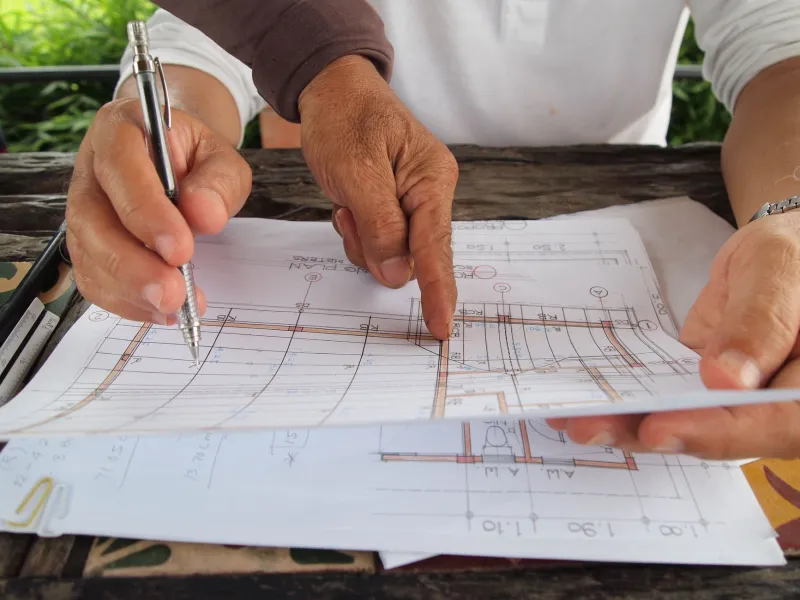
Our teams record dimensions room by room: wall lengths, ceiling heights, window openings, door swings, radiator clearances, and the exact locations of electrical panels, plumbing stacks, and structural columns. We photograph everything, tagging images to locations so the record can be consulted months later without a second site visit.
Why so thorough so soon? Because every error caught on day two costs minutes to fix. The same error caught during installation costs weeks of delay and real money.
Mood Framing: Alignment Before Aesthetics
Here's what surprises many clients: before any concept is presented, we frame the mood of the project itself.
In a short working session, we align on tone and reference points — not yet specific colors or furniture, but the emotional register the finished space should occupy. Warm and residential, or crisp and corporate? Quietly luxurious, or energetic and retail-forward? We often use a shared reference library so that when we say "restrained," we mean the same thing you do.
This step prevents the most common failure in design relationships: the client who loves the render but realizes, too late, that it answers a different question than the one they meant to ask.
What You Should Expect From Your Firm
If you're evaluating design firms, the first two days are a preview of everything that follows. You should expect:
- A scheduled kickoff conversation within days of signing, not weeks
- A clear point of contact — one person accountable for communication
- A documented scope recap confirming what was heard, in writing
- A site visit or data-gathering plan with dates attached
- A timeline for the first deliverable, so momentum is visible
A firm that goes quiet after signature isn't being deliberate. It's deferring the work that makes everything else possible.
Momentum You Can Feel
By the end of the first forty-eight hours, the foundation is laid: constraints documented, site conditions understood, aesthetic direction framed, and a communication rhythm established. Nothing has been drawn yet — and yet the project is already real.
That's the quiet advantage of a disciplined start. When the first render does arrive, it won't feel like a guess. It will feel inevitable — because everything behind it was built on what you told us, measured on your site, in those first two days that most clients never see.