Before the Dumpster Arrives: A Practical Triage for Inherited Furniture
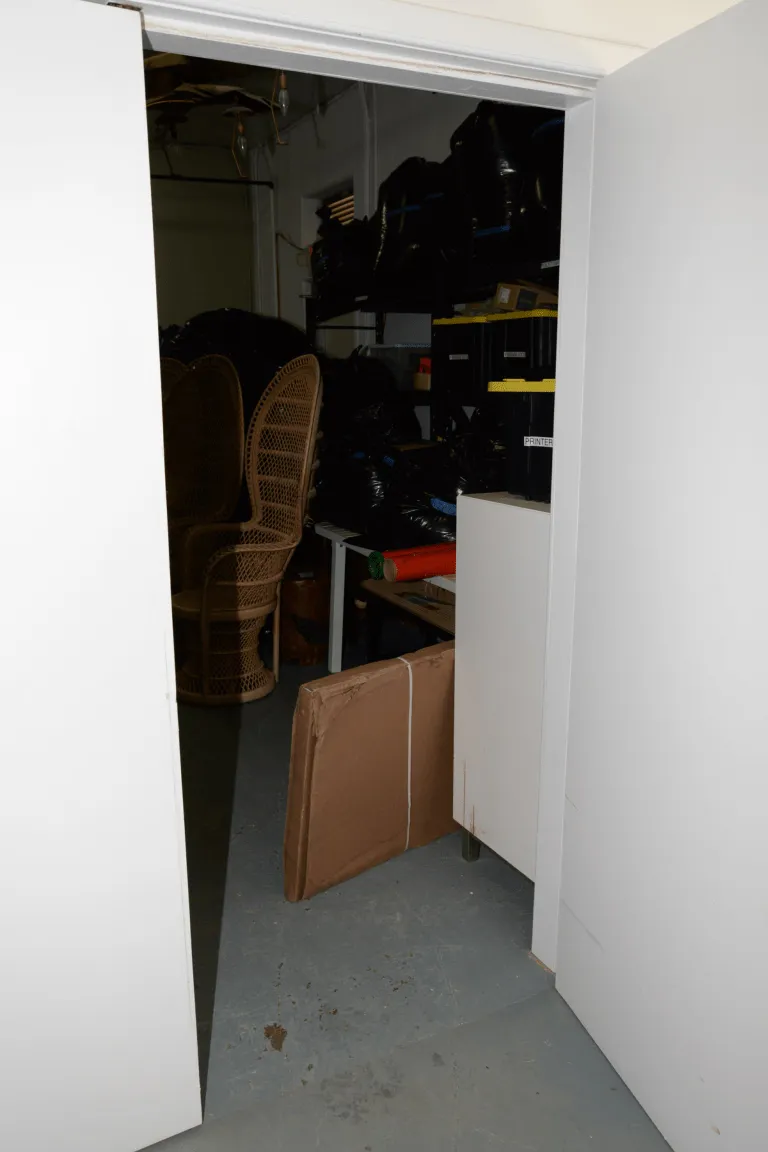
Photo: Federal Bureau of Investigation, Public domain, via Wikimedia Commons
A renovation rarely starts with a blank room. It starts with a room full of decisions. The previous tenant leaves behind desks, chairs, casework, shelving, lighting, and the occasional object that defies categorization. For one client, the inheritance amounted to roughly four hundred chairs. For another, it was a maze of systems furniture installed during a previous decade and never fully documented. The instinct is to call a hauler and move on. The better approach is to treat the inherited interior as an asset-triage problem before the first demolition crew arrives.
At LC2 Design Services, we frame this work as part of pre-design planning, not as an afterthought to construction. A thoughtful decommissioning plan protects the schedule, reduces avoidable spending, and keeps usable furniture out of the landfill. It also prevents a subtler problem: allowing a room full of inherited pieces to dictate the design before anyone has decided what the space actually needs to do.
Start With an Inventory, Not a Dumpster
The first step is a room-by-room audit. Count everything. Photograph everything. Record dimensions, condition, age where known, manufacturer, warranty status, and any obvious compliance concerns. Note whether an item is freestanding, systems-based, mounted, or built in. For seating, capture upholstery condition, frame integrity, and whether the piece meets current ergonomic or fire-code expectations. For casework and shelving, note whether it is modular, load-rated, and worth adapting.
The inventory does not need to be elegant, but it does need to be complete enough to support decisions. “Unknown” is not a category. If a piece cannot be identified or assessed, assign someone to resolve that gap before the project team starts debating reuse. A simple spreadsheet with photographs and condition grades is sufficient. The goal is to replace anecdote with evidence.
The Reuse Equation: Compare Total Cost, Not Sticker Price
Reuse is often assumed to be cheaper than replacement. Sometimes it is. Sometimes it is not. The relevant comparison is total cost over the remaining life of the item, not the price of a new chair versus the price of keeping an old one.
For each candidate, estimate the cost to clean, repair, reupholster, refinish, store, move, and bring it into compliance with the new design and local code. Add the cost of design integration: will the inherited piece fit the planned layout, or will the layout be compromised to accommodate it? Then compare that figure with the cost of procurement, delivery, installation, and disposal for a replacement. Include lead times. A slightly more expensive new chair that arrives in eight weeks may be a better decision than a “free” inherited chair that requires twelve weeks of refurbishment and a storage unit in the interim.
We typically sort inherited furniture into four tiers: keep as-is, refurbish, redeploy to another location, or release. The tiers should be agreed upon by the client’s operations, facilities, and finance stakeholders before anything leaves the building. That agreement prevents the familiar late-project discovery that a piece someone intended to keep was quietly discarded.
Where Furniture Goes When It Leaves
Once an item is designated for release, the question becomes destination. Resale is appropriate for high-quality pieces with a resale market: task chairs, conference tables, casegoods, and certain systems furniture. Liquidators and consignment partners can move volume, though they will take a fee and may set their own pickup terms. Online marketplaces can yield better prices for individual items but require staff time, photography, and buyer management.
Donation is often the most practical route for usable furniture that no longer fits the design. Habitat for Humanity ReStore locations, schools, community organizations, and nonprofit workforce programs accept selected items. Eligibility varies by location and condition, so confirm acceptance criteria before scheduling a pickup. For tax purposes, clients should consult their own advisors; documentation of the donation should be assembled regardless of the accounting treatment.
Recycling is the next tier for metal, wood, and select components. Landfill should be the last resort, not the default. In some jurisdictions, disposal rules for commercial furniture are stricter than they used to be, and haulers may require separation of materials. A disposal plan that ignores those rules can create costly delays at the loading dock.
Build a Disposal Plan With Dates and Owners
A disposal plan is a schedule, not a philosophy. It should identify what leaves, when it leaves, who authorizes the release, where it stages in the interim, and how the building’s elevators, loading zones, and security procedures will accommodate the movement. Large furniture moves rarely happen efficiently in the middle of active construction. Sequence them before demolition or after hours, and confirm that the chosen hauler can handle the volume.
Assign a single owner for the decommissioning work. The project manager can coordinate, but someone on the client side should hold decision authority for ambiguous items. Keep a photographic record of what was removed, donated, sold, or discarded. That record is useful for facilities planning, sustainability reporting, and the occasional post-project question about where a particular table went.
The Design Opportunity Hidden in the Inventory
Inherited furniture is not only a liability. It can be a constraint that sharpens the design, or an asset that gives a new interior a sense of continuity. A well-made table, a distinctive shelving unit, or a collection of chairs with provenance can anchor a palette or provide character that new furniture would struggle to replicate. The key is to make that choice deliberately. Inherited pieces should earn their place in the new design, not occupy it by default.
That is why we prefer to complete the inventory and reuse analysis before schematic design advances too far. The design team can then plan around what is genuinely worth keeping and specify replacement or supplemental pieces with a clear understanding of the gaps. The result is a more coherent space and a more defensible budget.
A Short Checklist for the First Week
- Walk the space with facilities and operations, and photograph every room.
- Count and tag furniture by type, condition, and location.
- Identify items with compliance, safety, or ergonomic concerns.
- Estimate reuse costs, including storage, repair, and relocation.
- Confirm donation and resale channels before promising pickup dates.
- Assign a decommissioning owner and a decision deadline.
- Reserve a staging area and a budget line for removal.
A redesign is ultimately a series of decisions about what to keep, what to change, and what to let go. The furniture graveyard is not a moral failing; it is a planning problem. Handled with discipline, it becomes a measurable gain: less waste, fewer surprises, and a clearer path to a space that works. That is the kind of thoughtful design work that produces measurable results, even before the first wall comes down.