Where Budgets Leak: Five Costly Design Choices We've Learned to Flag Early
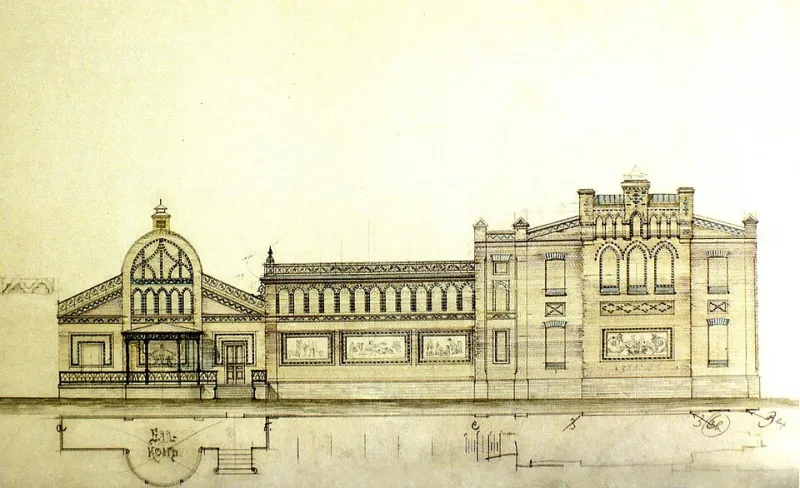
Photo: Silvio Danini, Public domain, via Wikimedia Commons
Every design firm loves to talk about its wins. Fewer are willing to publish their misses. At LC2 Design Services, we keep a running file of project post-mortems — written evaluations of what went right, what went sideways, and what a client's invoice looked like at the end. Reviewing that file recently, we noticed the same handful of expensive decisions appearing again and again. Not dramatic failures. Quiet ones. The kind that never make it into a portfolio photo but show up clearly on a final budget reconciliation.
Below are five of the most recurring offenders, each paired with the question we now ask before a single line is drawn.
1. Electrical Plans Designed Around Furniture That Moved
In one office refresh for a professional services firm in Columbus, the electrical layout was finalized before the client's growth plans were. Six months after handover, the client reorganized its teams, and suddenly three conference rooms had outlets exactly where table legs needed to be and nowhere near where screens would mount. The fix involved surface-mounted raceways and two additional circuits — a five-figure retrofit for what would have been a few hours of revision time upfront.
The question that prevents it: "How might this space be used differently in three years?" If nobody on the project team can answer that, the electrical plan isn't ready.
2. Statement Finishes With Lifetime Maintenance Bills
A boutique hotel lobby we reviewed (not our project, fortunately) specified a gorgeous brushed-brass wall cladding. What the spec sheet didn't capture was the fingerprint, patina, and specialty-cleaning contract that came with it. Over a five-year horizon, the maintenance line item exceeded the cost of the material itself. We've seen the same dynamic with white resin countertops, natural oak flooring in high-traffic retail, and matte black fixtures in hard-water regions.
The question that prevents it: "What does this finish cost to maintain annually, not just to install?" We now require a ten-year total-cost figure for any hero material before it enters a presentation.
3. Lighting Designed for the Empty Room
Photogenic renderings are rendered in perfect conditions. Real rooms have glare on monitors at 2 p.m. and dim corners once shelving goes up. One client's home office project required a complete fixture swap after move-in because the original plan — beautiful on paper — put the primary work surface directly under a south-facing window with no diffused fill. The replacement fixtures, electrician callback, and drywall patching cost more than the original lighting budget in full.
The question that prevents it: "Has anyone simulated this lighting at the worst hour of the day?" Worst-case scenario modeling costs almost nothing in design software and everything if skipped.
4. Millwork That Fights the Building, Not the Budget
Custom cabinetry is often where scope quietly doubles. On a residential project in the Carolinas, a floor-to-ceiling storage wall was designed against an out-of-plumb wall in a 1970s house. The scribing, shimming, and field adjustments added weeks of carpentry labor. A design that had acknowledged the building's actual geometry — a slight reveal, a scribe detail planned in advance — would have looked nearly identical and cost dramatically less.
The question that prevents it: "What are the real dimensions, verified on-site, before this piece is priced?" Laser measurements before fabrication, not after.
5. Value Engineering Done at the Wrong Stage
The most expensive phrase in our industry is "we'll cut costs later." When value engineering happens after permits and procurement, you pay twice: once for the redesign and again in change orders to trades already mobilized. A mixed-use client learned this when a late-stage flooring substitution triggered rework of the transition details, the door thresholds, and ultimately the schedule.
The question that prevents it: "What is our cost-reduction strategy if bids come in high — and who owns it?" Contingency planning belongs in the design phase, where options are still cheap to change.
Why We Publish This
None of these examples involve incompetence. They involve ordinary decisions made under ordinary time pressure — the same conditions every project faces. The difference between a budget that holds and one that drifts is rarely talent. It's whether the right questions get asked while the answers are still inexpensive.
That's the philosophy behind our post-mortem practice, and it's what we bring to every engagement: not just good design, but measurable results you can audit. If you're evaluating design firms, we'd encourage you to ask any of them — including us — how they handle these five scenarios. The quality of the answer will tell you a great deal.