The Set Piece Trap: When a Restaurant's Photo Moment Becomes a Floor-Plan Problem
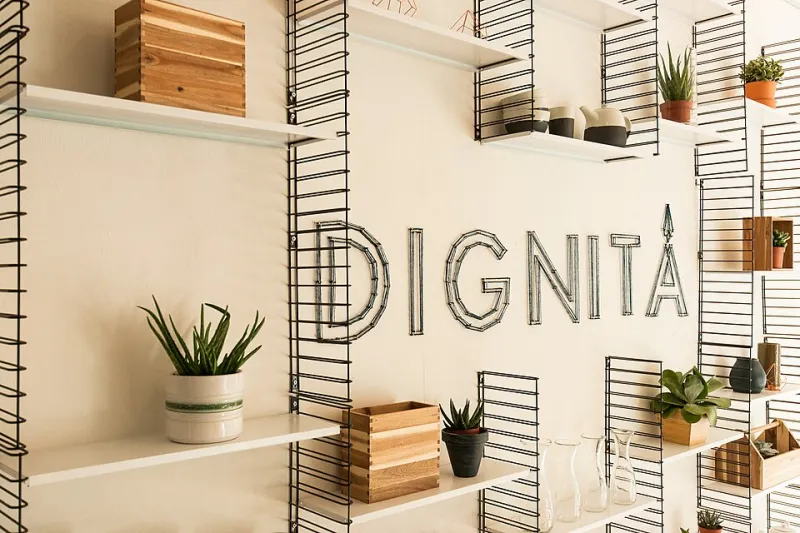
Photo: Granittemaj, CC BY 4.0, via Wikimedia Commons
Few requests arrive with more confidence than the camera corner. A restaurateur has seen a certain wall succeed on Instagram or TikTok, and the brief becomes concrete: recreate that moment here. The instinct is sound. In 2026, a meaningful share of restaurant discovery still begins on a phone, and a well-designed photographic moment can shape perception before a guest ever reads a menu. The problem is not the photograph. The problem is treating the photograph as a separate room within the room.
A restaurant is an operating system. Seats, service paths, acoustics, lighting controls, cleaning routines, and permit requirements all interact. When a photo moment is inserted late—after the floor plan, the mechanical schedule, and the lighting package are set—it tends to take square footage from something else. Sometimes it takes from circulation. Sometimes it takes from seats. Often it takes from the guest who is not photographing anything. The set piece trap is not that social media moments are frivolous. It is that they are frequently measured by appearance rather than by performance.
The Difference Between a Backdrop and a Room
A backdrop is designed to be looked at from one angle. A room is designed to be lived in from every angle. The most successful photo-driven interiors we have worked on do not separate those goals. The feature wall is also the banquette back. The statement light also washes the adjacent tables. The branded threshold also organizes the waiting zone. The moment is legible in a photograph, but it is doing ordinary work when no one is holding a phone.
That integration matters because restaurants are expensive to run. Every square foot carries rent, labor, utilities, and opportunity cost. A camera corner that consumes forty square feet and returns nothing beyond occasional posts is not automatically a failure, but it should be evaluated as a marketing expense rather than assumed to be a design success. The question is not whether the corner photographs well. The question is what else it does.
Where Photo Corners Quietly Spend Money
The costs rarely appear as a line item called “photo moment.” They appear elsewhere.
Circulation is the first casualty. A queue for photographs can block a server's path, crowd the host stand, or push guests into a fire exit clearance. In a busy dinner service, a two-minute photo pause at the wrong pinch point is not a small inconvenience. It changes the rhythm of the room.
Seating is the second. A banquette removed for a feature wall may look like a reasonable trade in plan view, but two lost seats at lunch and dinner compound over a year. In full-service restaurants, seat count is not decorative. It is revenue capacity.
Acoustics are the third. Photo walls often introduce hard, reflective surfaces: tile, metal, glass, neon, and millwork with little absorption. In a room already prone to noise, the most photographic corner can become the loudest one. Guests may love the image and avoid the table.
Lighting is the fourth. Statement fixtures frequently require their own controls, dimming protocol, and maintenance access. If the fixture is specified for appearance rather than for how faces and food render, the room may photograph well in one corner and feel dim or harsh everywhere else.
Operations are the fifth. Fingerprints, dust, dried spills, and plant debris all accumulate on surfaces chosen for a camera. A finish that looks flawless at installation can look tired by the second month if it is not cleanable and repairable.
What to Keep, What to Cut, What to Recast
Keep one strong, anchored moment rather than several competing ones. A single wall with genuine material depth, designed lighting, and a clear relationship to seating will outperform a scatter of props. Keep lighting that serves both the camera and the table: vertical illumination for faces, warm color temperature, high color rendering, and dimming that does not turn the room into a cave. Keep a reset routine in mind. If the moment cannot be returned to order in under two minutes during service, it will eventually be neglected.
Cut duplicate moments. Two photo walls in a small dining room usually divide attention and budget. Cut oversized signage that overwhelms the architecture and dates quickly. Cut loose props that require storage and staff time. Cut any feature that compromises an accessible route, a service aisle, or a required exit clearance. Those are not aesthetic trade-offs; they are operational and code issues.
Recast before you add. Existing architecture can often become the moment: a window line, a stair, a bar back, a column, or a change in ceiling height. A rotating art program can provide novelty without permanent square-footage cost. A well-lit menu wall or open kitchen can be more photographically generous than a dedicated corner because it is already part of the guest experience. The goal is not to suppress the camera. It is to make the camera useful to the room.
A Simple Square-Footage Test
Before committing to a photo-driven feature, measure the whole footprint it occupies, including the queue, the clearance, and the furniture that must move to accommodate it. Then ask four questions.
Does it seat, serve, or sell? If the answer is none of those, treat it as marketing spend and budget accordingly. Can it be reset quickly during service? If not, redesign the detail or reduce the material palette. Does it improve the experience for guests who never take a photograph? If not, it is probably a backdrop, not a room. Is it on the natural path, or does it require guests to interrupt service to use it? The best moments are encountered rather than hunted.
A simple scorecard helps. Track the footprint, the lost seat count, the added cleaning time, the lighting load, and the number of posts or tags it generates over a defined period. Compare that against the revenue per square foot of the surrounding area. The result will not always be conclusive, but it will make the conversation honest. Some moments earn their keep through direct discovery. Others earn it by making the whole room feel more deliberate. A few do neither.
Designing for the Camera Without Designing for the Algorithm
The most durable approach is to design a room that happens to photograph well. Use materials that age gracefully and clean easily. Light faces and food first, then the wall. Give the camera depth rather than a flat plane. Use brand marks at a human scale. Add absorption near hard feature surfaces. Coordinate the moment with the host stand, the service path, and the waiting experience. These choices do not make the room less photogenic. They make it more credible, and credibility is what guests tend to remember after the post has scrolled away.
The camera corner is not the enemy of good restaurant design. The enemy is the set piece that consumes the room without contributing to it. When a photo moment is planned as part of the whole—seating, service, sound, light, and maintenance included—it can earn its square footage. When it is treated as a separate moment, it usually finds a way to charge the restaurant for the privilege.